


Modern Workplace
Next-generation IT operations & management automation
Transform your business through strategic operational improvements powered by innovative technologies. A modern technology strategy uses automation, intelligence, and digital innovation to simplify operations, reduce costs, and improve performance.
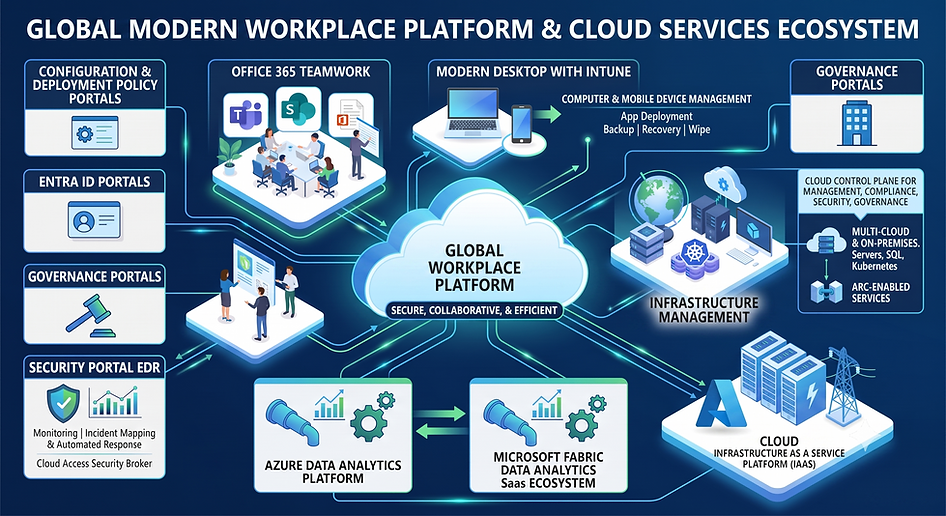
By implementing software-defined automation and modern workplace technologies, organizations can streamline labour-intensive processes, minimize manual effort, and enable teams to focus on higher-value activities. The result is a more agile, efficient, and scalable operation that delivers more with fewer resources.
Benefits include:
-
Reduced operational costs
-
Increased productivity and efficiency
-
Greater business agility and scalability
-
Improved service quality and consistency
-
Faster response and resolution times
-
Enhanced reliability and security
-
Better utilization of skilled resources
From Managed Services to Managed Automation
Move beyond traditional IT services and embrace IT Managed Automation. By combining Microsoft’s Modern Workplace technologies with Data Perceptions’ expertise, organizations can deploy next-generation IT operations that proactively manage, automate, and optimize technology environments.
The outcome is a better operating model that enhances service delivery, accelerates business outcomes, and enables your organization to provide higher levels of service while controlling costs.
Do more with less. Deliver better service. Operate with greater agility.
Advanced Security and Management Tools
Microsoft brings advanced security tools en masse to organizations that previously could not afford this level of cybersecurity with its advanced Microsoft 365 licensing options.

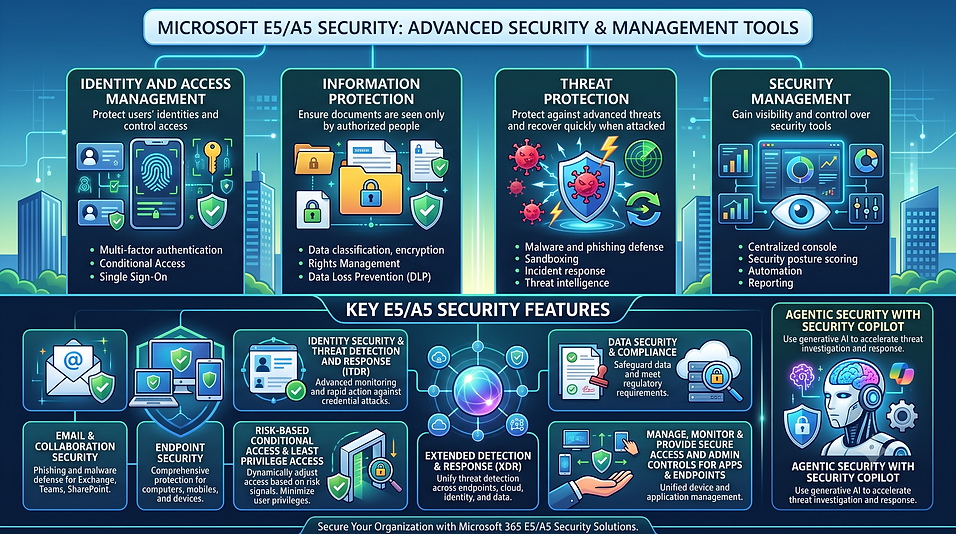
Partner with Data Perceptions to develop a cybersecurity strategy and deploy advanced cybersecurity services.
A high-level overview of available functionality includes:
-
Identity and access management - Protect users’ identities and control access to valuable resources
-
Information Protection - Ensure documents are seen only by authorized people
-
Threat Protection - Protect against advanced threats and recover quickly when attacked
-
Security Management - Gain visibility and control over security tools
-
E5/A5 security
-
Email and collaboration security
-
Endpoint security
-
Identity security, threat detection, and response (ITDR)
-
SaaS security
-
Risk-based Conditional Access and least privilege access
-
Extended detection and response (XDR)
-
Data security and compliance
-
Manage, monitor, and provide secure access and admin controls for apps and endpoints
-
Agentic security with Security Copilot
-
Products integrated with Security Copilot:
-
Microsoft Defender
-
Microsoft Sentinel
-
Microsoft Defender for Cloud
-
Microsoft Intune
-
Microsoft Entra
-
Microsoft Purview
Background links:
Microsoft Graph
Microsoft Graph is the gateway to data and customized data workflow in Microsoft cloud services. Microsoft Graph includes a unified REST API, client libraries, and data connectors that link to core services across Microsoft 365, Windows, and Enterprise Mobility + Security. It acts as a single gateway (https://graph.microsoft.com) to access user data, organizational relationships, and cloud intelligence.
Microsoft Graph can access Azure identity-related logs; for more, Azure Resource Graph is needed to access infrastructure-related Azure logs. Microsoft Graph data can also be ingested in Azure Data Analytics Platform tools or ingested into the Microsoft Fabric data analytics SaaS platform.
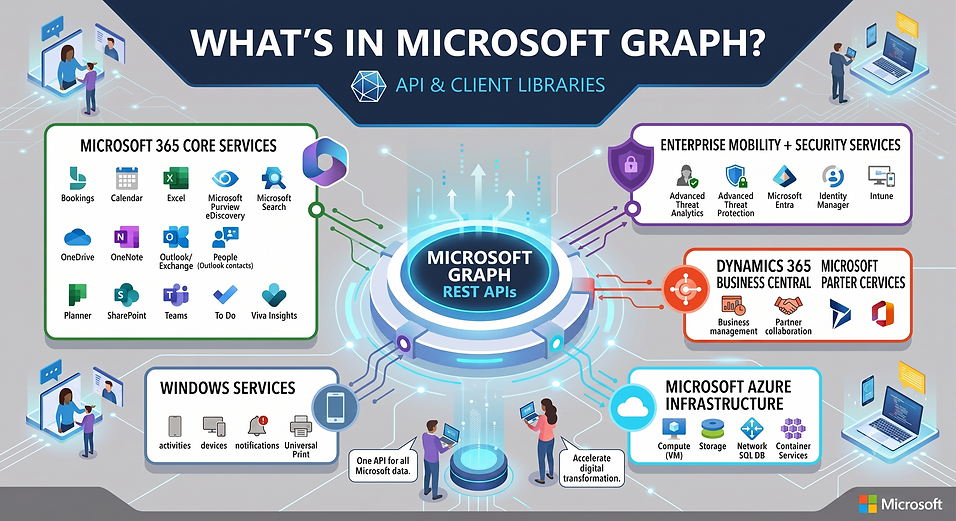
Work with Data Perceptions for Graph analytics or REST API operations; examples include introducing call-center-like features and reporting into Teams phone or data analytics reporting for Microsoft cloud activities.
Background Links
-
Microsoft Graph overview - Microsoft Graph | Microsoft Learn
-
Major services and features in Microsoft Graph - Microsoft Graph | Microsoft Learn
-
Overview of Azure Resource Graph - Azure Resource Graph | Microsoft Learn
Modern workplace areas
-
Modern desktop
-
Security and compliance
-
Teamwork
-
Intelligent communications
Background Links
Modern Workplace Strategy Development
Plan organizational improvements with our modern workplace strategy services. Design and tailor strategic advantages, develop a roadmap for execution, and create continuous management and operational support.
Our modern workplace strategy services empower you to create a tailored plan that enhances your operations through technology, driving better results. This comprehensive plan blends essential and strategic elements, optimizing day-to-day operations for greater efficiency, quality, and service excellence. By integrating the best-available technologies and streamlining your processes effectively, the workplace experience is improved for employees and boosts customer outcomes.
Security concerns are often drivers of modern workplace technologies. More automation in the deployment of devices, applications, and services allows for later incident-handling capabilities of containment, eradication, and recovery. Advanced cloud management applications also improve incident detection and analysis and preparation for incident handling.
Modern Workplace Deployment Services
Set up and deploy tailored, innovative, modern workplace solutions. Our services offer collaborative support and guidance to operational teams during configuration, promoting effective knowledge-sharing. Choose from a range of customizable deployment options to meet your specific needs.
For Microsoft 365 customers, modern workplace deployment services are based on existing cloud infrastructure that organizations can customize through configuration. We typically deploy based on design documents, using a team of experts to allow for faster deployments with less rework. Different team members can configure components in parallel. Often, the deployment is guided by one of our experts, while work is completed by our customer’s operational personnel to allow for knowledge transfer and training.
Design documents are often diagrams or drawings, similar to the way the construction industry uses drawing standards. The rate of change in the information technology industry makes design standards challenging. The design documents are usually created at the early stages of the project based on the modern workplace strategy roadmap or from a security assessment remediation roadmap.